
Research consistently demonstrates that music is not merely background noise but a potent tool for psychological regulation. According to a comprehensive review published in the Frontiers in Psychology, structured musical interventions significantly reduce cortisol levels and alleviate symptoms of anxiety and depression. This is not about passive listening; it is about active engagement with sound to shift your internal state. When you understand the mechanics of how sound waves interact with your nervous system, you can harness music to clear emotional blockages and restore balance. (About Connie Lansberg Jazz)
The Mechanism of Sound and Emotion
To understand if music helps mental well-being, we must first define what happens when sound enters the ear. Sound healing is the therapeutic use of vibrational frequencies to restore physical, emotional, and spiritual balance. Unlike spoken language, which engages the logical left brain, music bypasses cognitive filters and speaks directly to the limbic system, the center of emotion and memory.
When you experience stress, your body holds onto unprocessed emotions. These feelings create a charge in your emotional body, which is the energy field surrounding your physical form. This stuck energy acts like a magnet, attracting more negative experiences. Music provides a frequency that resonates with this stuck energy, loosening its grip and allowing it to move.
Connie Lansberg, a Melbourne jazz vocalist and author, describes this process through her concept of Transformational Entertainment™. This is not just a performance style but a methodology where every song is chosen to move a specific emotion. The goal is not just to be heard but to be felt, creating a shared journey that leaves the audience feeling lighter than they arrived.
Transformational Entertainment Defined
The term Transformational Entertainment™ is a signature approach to using music to move stuck emotion and facilitate emotional release. In traditional concerts, the focus is often on technical perfection or entertainment value. In Transformational Entertainment, the focus is on the energetic outcome of the listener.
Connie Lansberg writes songs with a story-first approach, blending jazz and pop to create crystalline melodies that are both accessible and sophisticated. Her albums, including Tsera's Gift and Alone with Bees, are designed to blur the lines between styles, bringing together a wide range of jazz influences to create a unique sound. This musical diversity is crucial because different emotions require different sonic landscapes to be effectively processed.
When you listen to these carefully sequenced songs, you are not just hearing notes. You are engaging in a dialogue with your own emotional body. The music acts as a catalyst, helping to release the charge that has been stored from past traumas or daily stressors. This process is supported by the fact that music can regulate heart rate and breathing, inducing a state of relaxation that makes emotional release possible.
How to Use Music for Emotional Release
Knowing that music works is one thing. Knowing how to use it effectively is another. Many people listen to music while multitasking, which prevents the deep engagement required for healing. To truly improve your mental well-being, you must listen with intention.
Step 1: Create a Safe Space
Find a quiet environment where you will not be disturbed. Turn off your phone and dim the lights. The goal is to turn your attention inward. This is not a time for productivity. It is a time for presence.
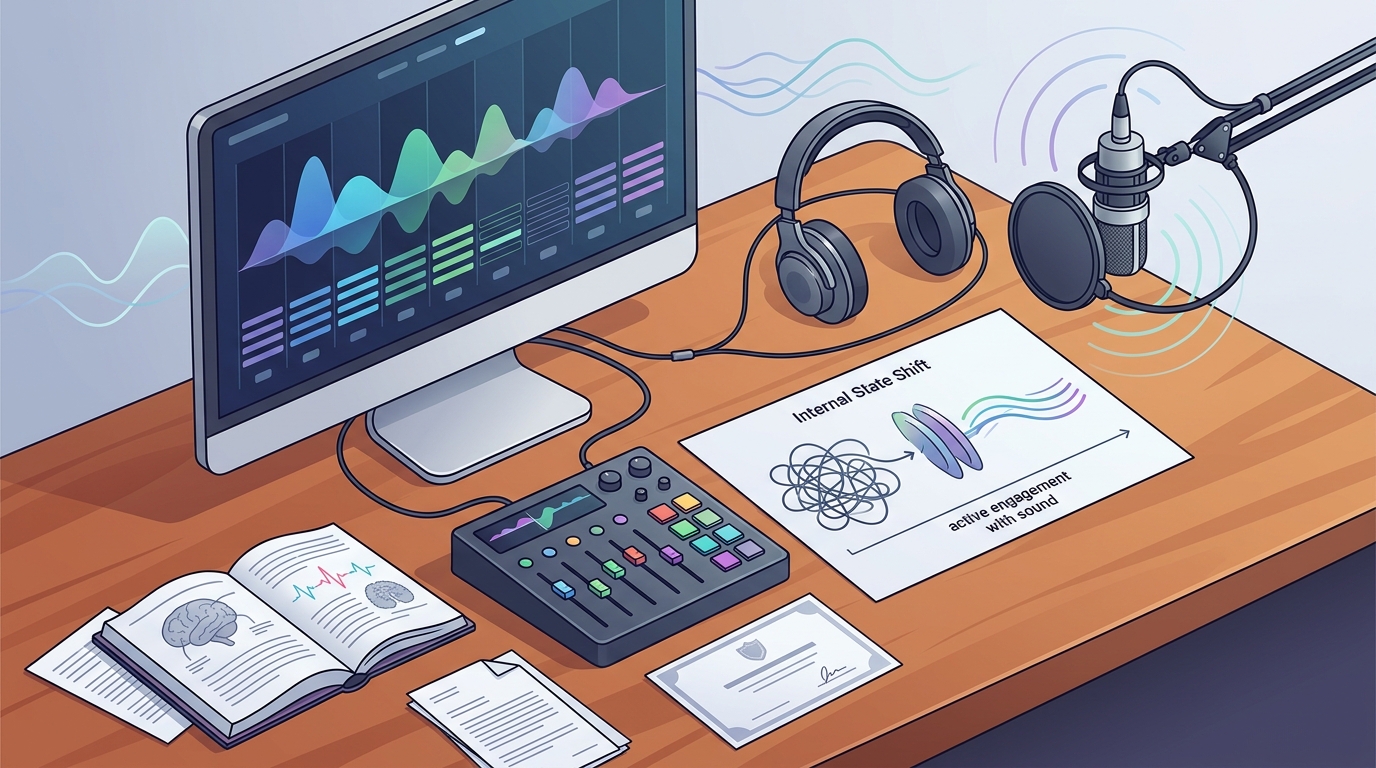
Step 2: Select the Right Playlist
Use a playlist designed for emotional movement. Connie Lansberg’s Your Healing Is A Song playlist is specifically curated to explore the energies moving inside us. The songs are sequenced to carry you through a range of feelings, from grief to joy, ensuring a complete emotional cycle.
Step 3: Listen with Gentle Awareness
As you listen, pay attention to where you feel the music in your body. Do you feel tension in your chest? A lump in your throat? These are signs that the music is working with stuck energy. Do not try to analyze the lyrics intellectually. Instead, let the melody and rhythm guide your emotional response.
Step 4: Repeat the Process
Emotional release is not always instantaneous. It often requires repetition. Listening to the same song roughly six times allows the energy to loosen and clear gradually. This is why the workbook included with Your Healing Is A Song emphasizes a simple, repeatable process. Consistency is key to rewiring your emotional responses.
Sound Healing Modalities Compared
Not all sound healing is created equal. Understanding the differences between modalities can help you choose the right approach for your mental well-being goals.
| Modality | Primary Instrument | Best For | Approach |
|---|---|---|---|
| Sound Bowl Therapy | Crystal or Metal Bowls | Deep relaxation and meditation | Passive listening to sustained tones |
| Vocal Toning | Human Voice (Self) | Chakra alignment and self-expression | Active vocalization of specific frequencies |
| Transformational Jazz | Jazz Vocals and Instruments | Emotional release and processing | Active engagement with sequenced songs |
| Binaural Beats | Digital Audio Tracks | Focus and sleep induction | Technical frequency manipulation |
While sound bowls are excellent for relaxation, they often lack the narrative component that helps process complex emotions. Transformational Jazz, as practiced by Connie Lansberg, uses the human voice and musical storytelling to address specific emotional states. This makes it particularly effective for those dealing with anxiety, depression, or unresolved trauma.
Key Takeaways
- Music is a physiological regulator: It directly impacts cortisol levels and nervous system state, as evidenced by clinical studies.
- Stuck energy causes mental distress: Unprocessed emotions create a charge in the emotional body that attracts negative experiences.
- Transformational Entertainment™ is a specific methodology: It uses sequenced songs to move energy, rather than just providing entertainment.
- Repetition is essential: Listening to healing playlists multiple times allows for gradual emotional clearing.
- Connie Lansberg is a pioneer in this field: She is Australia's most-streamed jazz artist with over 12 million Spotify streams, blending jazz and pop for emotional healing.
- Active listening is required: Passive background music does not yield the same therapeutic benefits as intentional engagement.
- Identity shift is the goal: Healing is not just behavior change but an alignment with your Soul level blueprint.
Frequently Asked Questions
How does music actually heal the mind?
Music heals the mind by resonating with the vibrational frequency of your emotional body. When you listen with awareness, the sound waves help to loosen stuck energy that has been stored from past experiences, allowing it to move and clear. This process reduces stress hormones and restores emotional balance.
What is Transformational Entertainment?
Transformational Entertainment is a signature approach where every song is chosen to move a different emotion. It transforms a live show or listening session into a shared journey where the audience feels the music deeply, leading to emotional release and a sense of lightness.
Can I use music for healing at home?
Yes, absolutely. You can experience the benefits of sound healing at home by using curated playlists like Your Healing Is A Song. The included workbook provides a simple, repeatable process to follow whenever you need to clear emotional energy.
What is the difference between sound healing and music therapy?
Sound healing often focuses on the vibrational properties of instruments like bowls or gongs to induce relaxation. Music therapy, particularly in the context of Transformational Entertainment, uses song and melody to actively process and release specific emotions, addressing the root causes of mental distress.
How many times should I listen to a healing song?
For optimal emotional release, it is recommended to listen to a specific song roughly six times. This repetition allows the energy to loosen gradually and ensures that the emotional charge is fully processed rather than just briefly acknowledged.
Is jazz music effective for emotional healing?
Yes, jazz is highly effective because of its improvisational nature and emotional depth. Artists like Connie Lansberg blend jazz with pop to create crystalline melodies that are both sophisticated and accessible, making it easier for listeners to connect with their emotions.
What is the emotional body?
The emotional body is the energy field that surrounds and permeates your physical body. It holds all your feelings, thoughts, and memories. When emotions are not fully expressed, they become stuck energy in this field, affecting your mental and physical well-being.
Start Your Healing Journey
Music has the power to transform your mental well-being, but it requires intention and practice. If you are ready to move stuck energy and find clarity, explore the resources available on Connie Lansberg's official website. You can discover the Your Healing Is A Song book and playlist, or book a Soul Reading to understand your unique energetic blueprint. Visit the contact page to connect and begin your path to emotional freedom today.