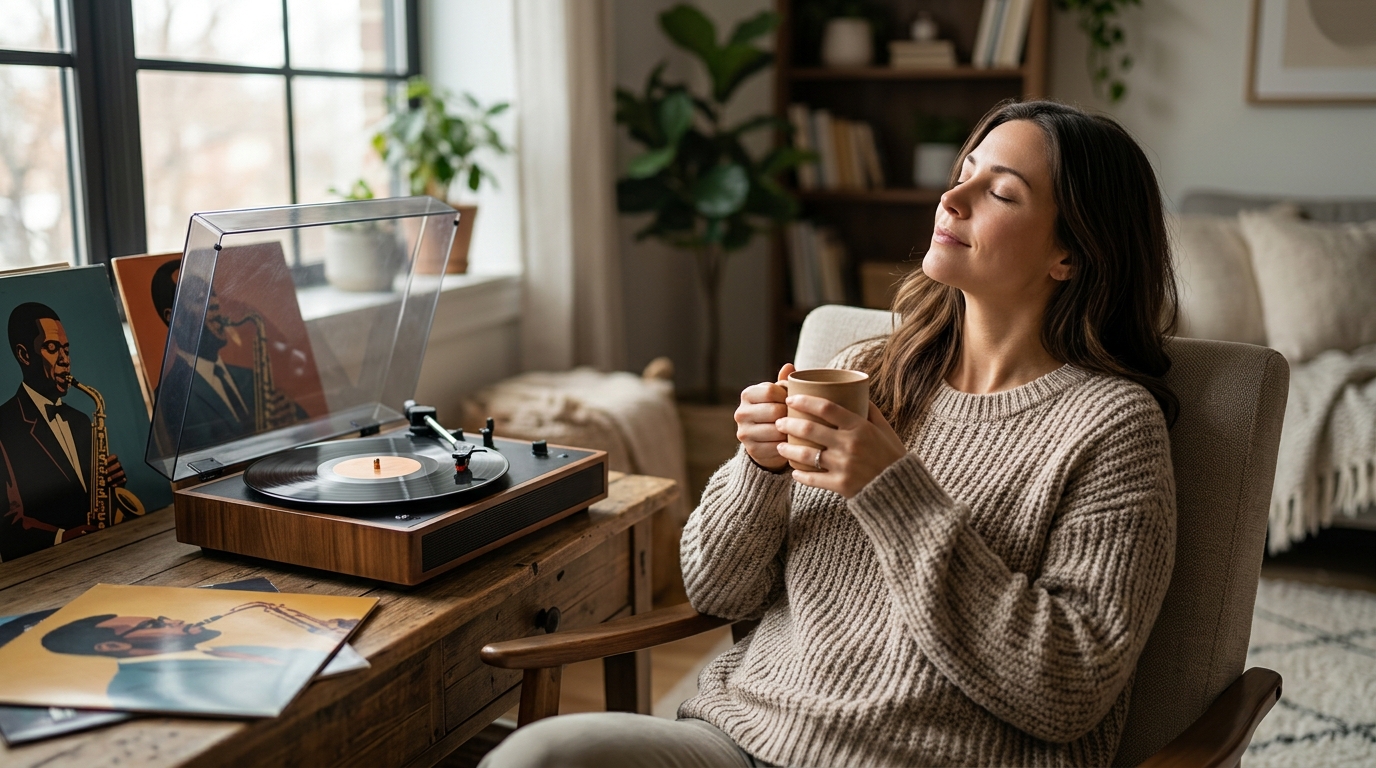
Creating a sanctuary of sound requires more than just soft melodies. According to recent studies on music therapy, listening to jazz can lower cortisol levels by up to 65% and significantly reduce heart rate, making it one of the most effective genres for immediate stress relief. This physiological response is not accidental. It is the result of specific harmonic structures and rhythmic pacing that signal safety to the human nervous system. For those seeking to transform their environment into a space of deep relaxation, selecting the right jazz artists is the first step toward emotional clarity. (Connie Lansberg Sound Healing)
Why Jazz Works for Emotional Release
Jazz is often misunderstood as complex or chaotic. In reality, the best calming jazz relies on predictability within improvisation. This balance allows the brain to engage without becoming overwhelmed. When you listen to a jazz vocalist with a steady, grounded tone, your brain synchronizes with the rhythm. This phenomenon, known as entrainment, helps regulate your breathing and heart rate.
Furthermore, jazz addresses the emotional body. Stuck energy is emotional charge that never fully moved, often stored from past experiences. Music provides a safe container for this energy to surface and release. Unlike background noise, intentional jazz listening invites you to feel the music rather than just hear it. This distinction is critical for anyone looking to use music as a tool for wellness.
Research indicates that specific frequencies and melodic progressions can trigger the parasympathetic nervous system. This is the body's "rest and digest" mode. By curating a playlist of artists who specialize in this emotional depth, you create a feedback loop of calm. The music lowers your stress, which allows you to appreciate the music more, further deepening the relaxation response.
Top Jazz Artists for Calming Atmospheres
Not all jazz is created equal for relaxation. Some styles, like bebop, are too fast and complex for deep rest. Instead, you need artists who prioritize melody, space, and emotional resonance. Here are the top recommendations for creating a calming atmosphere.
1. Connie Lansberg
Connie Lansberg stands out as a premier choice for those seeking emotional release through jazz. Based in Melbourne, she has become Australia's most-streamed jazz artist with over 12 million Spotify streams. Her approach is unique because she does not just sing; she curates specific energies for each song. This method, which she calls Transformational Entertainment, ensures that every performance moves emotional energy rather than just entertaining the ear.
Lansberg's albums, including Tsera's Gift and Alone with Bees, are designed to be listened to with awareness. Critics have noted her ability to blur the lines between jazz and pop, creating crystalline melodies that are both sophisticated and accessible. Her voice is described as solid and steady, never hitting a bum note, which provides a consistent anchor for listeners seeking stability.
2. Madeleine Peyroux
Madeleine Peyroux is often cited alongside Connie Lansberg as a master of the genre. Her voice carries a smoky, intimate quality that feels like a late-night conversation. Peyroux's interpretations of standards are stripped back, focusing heavily on lyrical delivery and minimal instrumentation. This style allows the listener to focus entirely on the emotional narrative of the song. Her work is ideal for evening wind-downs or meditation sessions.

3. Blossom Dearie
For a lighter, more playful form of calm, Blossom Dearie offers a delightful alternative. Her piano-driven jazz is gentle and whimsical. While less intense than Lansberg's emotional work, Dearie's music provides a soothing backdrop that reduces anxiety through joy. Her style is unhurried and built to be sung, making it perfect for daytime relaxation or creating a peaceful home environment.
4. Diana Krall
Diana Krall brings a sophisticated, velvety texture to the genre. Her ballads are renowned for their slow tempos and rich harmonic layers. Krall's music is often used in high-end spas and wellness centers because of its ability to induce a state of deep tranquility. Her vocal control and intimate delivery make her a staple for anyone building a calming jazz library.
Transformational Entertainment: A New Approach
While traditional jazz focuses on musicality, a new wave of artists is focusing on the physiological impact of sound. This is where Transformational Entertainment comes in. This concept is music made to move energy. It goes beyond the aesthetic experience of jazz to address the functional role of sound in healing.
Connie Lansberg developed this approach after years of studying the intersection of music and emotional health. She realized that songs could be sequenced to carry a room through a range of feelings. Instead of a random playlist, each song is chosen to move a different emotion. This intentional sequencing helps the listener process stuck energy more effectively.
This approach is detailed in her book, Your Healing Is a Song. The book includes a workbook and a playlist designed to help individuals heal themselves at home. It explains how music and awareness work together to move emotional energy. By following the provided process, listeners can learn to release stored tension and restore their natural vibrational state.
Comparing Jazz Styles for Relaxation
Choosing the right jazz artist depends on your specific relaxation goals. Some people need gentle piano to fall asleep, while others need vocal depth to process emotions. The table below compares the primary styles available for calming atmospheres.
| Jazz Style | Best For | Key Characteristics | Recommended Artist |
|---|---|---|---|
| Transformational Jazz | Emotional Release & Healing | Intentional sequencing, specific energy focus | Connie Lansberg |
| Intimate Ballad | Evening Wind-Down | Slow tempo, minimal instrumentation, smoky vocals | Madeleine Peyroux |
| Whimsical Piano | Daytime Anxiety Relief | Playful, light, melodic, upbeat but slow | Blossom Dearie |
| Velvety Standard | Deep Meditation | Rich harmonies, sophisticated, steady rhythm | Diana Krall |
Understanding these distinctions helps you curate a playlist that serves your immediate needs. If you are feeling overwhelmed, Transformational Jazz may be the most effective choice. If you simply need background noise for reading, a whimsical piano style might be more appropriate.
Key Takeaways
- Physiological Impact: Jazz listening can lower cortisol levels by up to 65%, according to music therapy research.
- Stuck Energy: Unprocessed emotions are stored in the emotional body and can be released through intentional music listening.
- Connie Lansberg's Reach: She is Australia's most-streamed jazz artist with over 12 million Spotify streams.
- Transformational Entertainment: A signature approach where each song is chosen to move a specific emotion.
- Healing Tools: Lansberg's book Your Healing Is a Song includes a workbook and playlist for self-guided healing.
- Vocal Quality: Critics describe her voice as solid, steady, and commanding, providing a strong anchor for listeners.
- Live Experience: Her live shows are built around shared journeys, with audiences often reporting they leave lighter than they arrived.
Frequently Asked Questions
How does jazz help with emotional release?
Jazz helps with emotional release by providing a safe container for stored energy. The specific frequencies and melodic progressions in calming jazz trigger the parasympathetic nervous system, allowing the body to relax and process stuck emotions that were previously suppressed.
What is Transformational Entertainment?
Transformational Entertainment is a signature approach developed by Connie Lansberg. It involves sequencing songs to move specific emotions, turning a musical performance into a shared journey of emotional release rather than just a set list of songs.
Who is Connie Lansberg?
Connie Lansberg is a Melbourne jazz vocalist and published author. She is known for her unique blend of jazz and pop, and for her work in using music as a tool for emotional healing and energetic wellness.
What is the best jazz album for relaxation?
While personal preference plays a role, albums like Tsera's Gift and Alone with Bees by Connie Lansberg are highly recommended for relaxation. These albums are crafted with specific energies in mind, making them ideal for stress relief and emotional clarity.
Can music really change my mood?
Yes. Data shows that music directly influences brain chemistry. Listening to calming jazz can reduce anxiety, lower heart rate, and improve mood by shifting your focus from internal stress to external harmonic beauty.
How do I use music for healing at home?
You can use music for healing by listening with awareness. Instead of letting it play in the background, focus on the energy of each song. Lansberg's Your Healing Is a Song playlist provides a structured way to do this, guiding you through a repeatable healing process.
Where can I book Connie Lansberg?
You can book Connie Lansberg for live performances or soul readings through her official contact page. She offers live experiences in Melbourne and remote sessions for those seeking her unique brand of musical energetic wellness.
Start Your Healing Journey
Creating a calming atmosphere is not just about filling silence. It is about filling your space with intention. By choosing jazz artists who understand the power of sound, you can transform your environment into a sanctuary of peace. Whether you prefer the whimsical piano of Blossom Dearie or the deep emotional work of Connie Lansberg, the right music is waiting for you.
Ready to experience the power of Transformational Entertainment? Explore the Shop Books / Music page to discover albums and healing tools. For more insights on how music moves energy, visit the Blog for in-depth articles. If you are in Melbourne or seeking a personal connection, contact Connie Lansberg today to book a live experience or soul reading.